
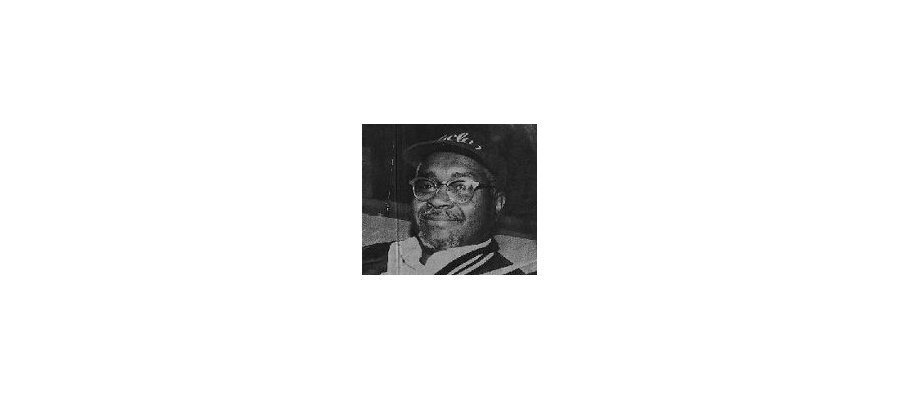
An ex-Black Panther turned anarchist
Lorenzo Komboa Ervin
Written by ex-Black Panther turned anarchist Lorenzo Komboa Ervin, Anarchism and the Black Revolution is both an easy-to-read introduction to the fundamental principles of class struggle anarchism and an analysis of their relevance to the black liberation movement. Also contains a good section on why the author is an anarchist and why non-class struggle anarchists are useless.
Taken from the libcom library edition, this text has been corrected for scanning errors in other online editions, and includes footnotes for explanations and more information.


Anarchist Theory and Practice
The major aim of this chapter is to list the major elements of Anarchist thought and to give examples of what some Anarchists think about them. Unlike other streams of political thought, Anarchists do not elevate certain texts or individuals above others. There are different types of Anarchists with many points of disagreement. The primary areas of debate among Anarchists relate to what form of organisation should be struggled for and what tactics we should use. For instance, some of their most significant differences concern the economic organisation of future society. Some Anarchists reject money, and substitute a system of trade in which work is exchanged for goods and services. Others reject all forms of trade or barter or private ownership as Capitalism, and feel that all major property should be owned in common.
There are Anarchists who believe in guerrilla warfare - including assassination, bombings, bank expropriations, etc. - as one means of revolutionary attacks on the State. But there also are Anarchists who believe almost exclusively in organisational, labour or community work. There is no single type, nor do they all agree on strategy and tactics. Some are opposed to violence ; some accept it only in self-defence or during a revolutionary insurrection.
Anarchists and Anarchism have historically been misrepresented to the world. The popular impression of an Anarchist as an uncontrollably emotional, violent person who is only interested in destruction for its own sake, and who is opposed to all forms of organisation, still persists to this day. Further, the mistaken belief that Anarchy is chaos and confusion, a reign of rape, murder and mindless, total disorder and insanity is widely believed by the general public.
This false impression primarily is still widely believed because people from across the political spectrum have consciously been promoting this lie for years. All who strive to oppress and exploit the working class, and gain power far themselves, whether they come from the right or the left, will always be threatened by Anarchism. This is because Anarchists hold that all authority and coercion must be struggled against. In fact, Anarchists want to get rid of the greatest perpetrator of violence throughout history : governments. To Anarchists, a Capitalist "democratic" government is no better than a fascist or Communist regime, because the ruling class only differs in the amount of violence they authorise their police and army to use and the degree of rights they will allow, if any. Through war, police repression, social neglect, and political repression, governments have killed millions of persons, whether trying to defend themselves or overthrow another government. Anarchists want to end this slaughter, and build a society based on peace and freedom.
What is Anarchism ? Anarchism is free or Libertarian Socialism. Anarchists are opposed to government, the state and Capitalism. Therefore, simply speaking, Anarchism is a non-governmental form of Socialism.
In common with all Socialists, the Anarchists hold that the private ownership of land, capital and machinery has had its time ; that it is condemned to disappear, and that all requisites for production must and will, become the common property of society, and be managed in common by the producers of wealth. Peter Kropotkin, in his Anarchist-Communism : Its Basis and Principles.
Though there are several different "schools" of Anarchist though, revolutionary Anarchist or Anarchist-Communism is based upon the class struggle, but it does not take a mechanist view of the class struggle taken by the Marxist-Leninists. For instance, it does not take the view that only the industrial proletariat can achieve Socialism, and that the victory of this class, led by a "communist working class party" represents the final victory over Capitalism. Nor do we accept the idea of a "workers’ state" . Anarchists believe that only the peasants, workers and farmers can liberate themselves and that they should manage industrial and economic production through workers’ councils, factory committees, and farm cooperatives, rather than with the interference of a party or government.
Anarchists are social revolutionaries, and feel that the Social revolution is the process through which a free society will be created. Self-management will be established in all areas of social life, including the right of all oppressed races of people to self-determination. As I have stated, self-determination is the right to self-government. By their own initiative, individuals will implement their own management of social life through voluntary associations. They will refuse to surrender their self-direction to the State, political parties or vanguard sects since each of these merely aid in establishing or re-establishing domination. Anarchists believe the state and capitalist authority will be abolished by the means of direct action : wildcat strikes, slowdowns, boycotts, sabotage, and armed insurrection. We recognise our goals cannot be separated from the means used to achieve them. Hence our practice and the associations we create will reflect the society we seek.
Crucial attention will necessarily be paid to the area of economic organisation, since it is here that the interests of everyone converge. Under Capitalism we all have to sell our labour to survive and to feed our families and ourselves. But after an Anarchist social revolution, the wage system and the institution of private and state property will be abolished and replaced with the production and distribution of goods according to the communist principle of : "From each according to ability, to each according to need." Voluntary associations of producers and consumers will take common possession of the means of production and allow the free use of all resources to any voluntary group, provided that such use does not deprive others or does not entail the use of wage labour. These associations could be food and housing cooperatives, cooperative factories, community-run schools, hospitals, recreation facilities, and other important social services. These associations will federate with each other to facilitate their common goals on both a territorial and functional basis.
This federalism as a concept is a form of social organisation in which self-determining groups freely agree to coordinate their activities. The only social system that can possibly meet the diverse needs of society, while still promoting solidarity on the widest scale, is one that allows people to freely associate on the basis of common needs and interests. Federalism emphasises autonomy and decentralisation, fosters solidarity and complements groups’ efforts to be as self-sufficient as possible. Groups can then be expected to cooperate as long as they derive mutual benefit. Contrary to the Capitalist legal system and its contracts, if such benefits are not felt to be mutual in an Anarchist society, any group will have the freedom to dissociate. In this manner a flexible and self-regulating social organism will be created, always ready to meet new needs by new organisations and adjustments. Federalism is not a type of Anarchism, but it is an essential part of Anarchism. It is the joining of groups and peoples for political and economic survival and livelihood.
Anarchists have an enormous job ahead of them, and they must be able to work together for the benefit of the idea The Italian Anarchist Errico Malatesta said it best when he wrote :
"Our task is that of pushing the "people " to demand and to seize all the freedom they can to make themselves responsible for their own needs without waiting for orders from any kind of authority. Out task is that of demonstrating the uselessness and harmfulness of the government, or provoking and encouraging by propaganda and action all kinds of individual and collective initiatives... After the revolution, Anarchists will have a special mission of being the vigilant custodians of freedom, against the aspirants to power and possible tyranny of the majority... "
Quoted in Malatesta : his Life and Times, edited by Vernon Richards
So, this is the job of the federation, but it does not end with the success of the revolution. There is much reconstruction work to be done, and the revolution must be defended to fulfil our tasks, Anarchists must have their own organisations. They must organise the post-revolutionary society, and this is why Anarchists federate themselves.
In a modern independent society, the process of federation must be extended to all humanity. The network of voluntary associations - the Commune - will know no borders. It could be the size of the city, state, or nation or a society much larger than the nation-state under Capitalism. It could be a mass commune that would encompass all the world’s peoples in a number of continental Anarchist federations, say North America, Africa, or the Caribbean. Truly this would be a new world ! Not a United Nations or "One World government" but a united humanity.
But our opposition is formidable - each of us has been taught to believe in the need for government, in the absolute necessity of experts, in taking orders, in authority - for some of us it is all new. But when we believe in ourselves and decide we can make a society based on free, caring individuals that tendency within us will become the conscious choice of freedom-loving people. Anarchists see their job as strengthening that tendency, and show that there is no democracy or freedom under government -whether in the United States, China or Russia. Anarchists believe in direct democracy by the people as the only kind of freedom and self-rule.
Anarchism and the Black Revolution - Lorenzo Komboa Ervin
Source : libcom.org
More Lorenzo Komboa Ervin texts : infoshop.org


